Tuesday, December 05, 2006

More stories--this time, listening

After my post last week about storytelling in business, I received a nice comment from Shawn Callahan of the Anecdote blog about using stories in business another way--about collecting and making sense of stories to understand deeply what's happening in a company. Shawn's ideas are summarized here.

Imagine that your company has recently reorganized. Deep in the organization many disruptions ensue. But what exactly is happening, and how do people really feel about it? Without this basic information it's impossible to assess the impact of the change, and how to mitigate the negative effects of the change.

Stories can help. Getting employees to describe in detail what is happening to them, without imposing limitations such as predetermined hypotheses, closed-ended questions, numerical ratings, etc.--yields much deeper insights (here's a neat white paper from Anecdote describing how this works). And from those insights, a company can design effective responses to improve the work environment and help an important change take root.

Thanks, Shawn, for pointing this out.

(Picture: the listening ear from sailortownbelfast.org)

, ,

Monday, December 04, 2006

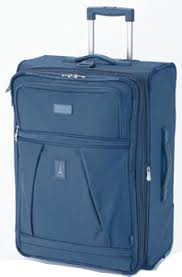
A very brief history of wheeled luggage

At the session on Sustainable Innovation at last week's Fortune Innovation Forum, William McDonough, the green architect and designer, said the following:

"Mankind isn't so smart. It took us 5,000 years to put wheels on luggage."

Which got me to thinking about the history of wheeled luggage, so here is the best history you can get on the subject based on a brief survey of the (internet-hosted) literature:

circa 1851: In "Moby-Dick," Queequeg talls the story of strapping his seachest to a wheelbarrow but then, not knowing how to maneuver the barrow, gathers the whole assembly and carries it.

very early 1900's: steamer trunks with two wheels are advertised.

1970's: wheels appear on traditional suitcases; travelers pulling them by leashes and poorly balanced suitcases toppling over ensue.

1989: Northwest Airlines pilot Bob Plath develops the roll-aboard suitcase for flight crews.

Today: wheels on everything. Soon we will be porting luggage at our front, back and sides, cocooned in storage, like Manhattanites walking their dogs.

(Picture: the TravelPro Crew5 series, via London Luggage)


, , , ,

Saturday, December 02, 2006

Is Microsoft innovative?

In case you missed it, there's a nice article in yesterday's Wall Street Journal featuring a dialogue between Robert Scoble and Dave Winer over whether Microsoft is an innovative company. Given the many shots leveled at Microsoft at the Fortune Innovation Forum this week, it's a timely read.

, , ,

Thursday, November 30, 2006

Heard on the floor - futurethink's workshop was excellent

Two separate people at the Fortune Innovation Forum told me they loved the futurethink breakout session "Food for Thought Workshop." If you're curious, as I am, about what you might have missed, here is a recent webcast from futurethink CEO Lisa Bodell.

You're welcome.

, , ,

Storytelling in business--and I don't mean fudging your numbers

I went to the "Innovative Story Solutions" session yesterday afternoon at the Fortune Innovation Forum, put on by The Moth, a storytelling group from New York.

So what the hell do stories have to do with innovation and business? Well, a lot of corporate life is about selling your ideas--to colleagues, bosses, customers and partners. And a compelling, concise story will work better than a Powerpoint any day.

Here are the main aspects of storytelling discussed at the workshop:

  • Set up what's at stake
  • Be selective - eliminate extraneous information
  • Show, don't tell - concrete details are far better than summary
  • Use a storytelling arc - a beginning, middle and end - and withhold some information to build suspense.
The workshop was highly interactive. Groups of six had to select a story and nominate a storyteller, prepare for twenty minutes (twenty minutes!). The storyteller then stood in front of the room and told the story. Great job by the participants, and the brave storytellers as well.

, , , ,

My metalmorphosis sculpture


I took the Metalmorphosis workshop today at the Fortune Innovation Forum. There are far more artistic sculptures here. But this one is all mine. Thanks for the workshop, Sophie!

By the way, Sophie's artwork is all over the Innovation Forum. It creates a very integrated, organic feel to the entire show.

,

Fortune Innovation Forum day 2--Sustainability and Profitability

Panelists were:
Chad Holliday, CEO of DuPont
William McDonough, architect specializing in sustainable design

On a 1-10 scale - the current state of sustainability in today's business (1-completely constructive, 10-completely sustainable):
McDonough - 4, Holliday - 3

Holliday said that it's criticial that business and government agree on the "rules of the road"--legislation--so American business's creativity can respond.

Most pressing issues: Holliday: use of water, greenhouse effect.

DuPont has been working on biological research for 15 years, and now have learned how to use corn and other renewable materials to generate polymers, rather than using petrochemicals.

The rise of oil prices has been a catalyst for manufacturers' adoption of these new materials. The marketing message is value to the consumer--the manufacturer uses the "green" to help market the product, though it can't command a significant price premium.

Cellulosic ethanol is a strategic product, and they are working on a biofuels joint venture with BP.

McDonough worked on the new Ford Rouge plant. World's largest green roof (10.5 acres)--vegetation and a dozen species of birds live there. The roof absorbs greenhouse gas, keeps temperature more stable, reduces the wind load on the building. Business case was as follows: Ford would have to pay $48MM to come into compliance with the Clean Water Act using traditional building methods. The sustainable technologies approach cost $13MM for roof, permeable parking lot, etc.

He also worked with Herman Miller to design a cradle-to-cradle chair. No petrochemicals, easily disassembled and remanufactured. A key value proposition is that Herman Miller will easily retain the customer, since they will come to collect the chair when you're done with it.

(picture: Ford's Rouge Plant)

, , ,

Wednesday, November 29, 2006

Here's something innovative--CEOs who speak candidly of their failures and difficulties

Interesting observations from this afternoon's CEO discussions at the Fortune Innovation Forum. Brian France of NASCAR and Brad Anderson of Best Buy spent time speaking of their company's weaknesses and failures.

France said that NASCAR is weakest in how they are covered by the media. ("We are not the home team, and no one writes about us on Tuesdays or Wednesdays.") But rather than complain about this or feel victimized, he used it as a rationale for investing in and improving NASCAR's own new-media initiatives.

And here's a good quotation from Brad Anderson. "I am 57 years old. I don't have a clue of what most Best Buy shoppers are like. But our people at the stores do. If I can listen to the right people, this organization has a future. If not, I should be out of here."

, , ,

Good communication is intensively visual

I'm a word person. I love what words can communicate. But in his session at the Fortune Innovation Forum today, Tom Wujec convinced me that expressing complex ideas visually is essential to communicating in today's business environment.

Edward Tufte, in his books, did a great job in describing how to strong graphics can present very complex information very succinctly and effectively. Tom's presentation built on those ideas by tying key types of communications to certain phases of the product development cycle.

His most impressive example was a map that was created and used by Fairchild Semiconductor to communicate their turnaround strategy. It enabled them to communicate and instill the same message across fifteen countries and ten languages.

, , ,

Metalmorphosis with Sophie Marsham


An innovation conference cannot be like all the rest. One feature of the Fortune Innovation Forum this year is an ongoing set of exercises where artist Sophie Marsham works with attendees to create flower sculptures out of scrap.

,

Bob Nardelli interview

Here at the Fortune Innovation Forum, David Kirkpatrick of Fortune Magazine is interviewing Bob Nardelli of Home Depot.

In the recent past they've focused on innovating in technology--self-checkout has reduced queue times 30% in Home Depot stores--and design--improving store layout, signage and lighting to allow people to find products faster.

Now, their biggest focus is innovating in merchandise - today they announced OrangeWorks, a partnership to accelerate designing new proprietary products for Home Depot stores.

Why isn't being a better retailer enough? Because they want to be an attraction to the community. Distinctive merchandise will both draw in more shoppers and have them leave with more stuff.

They're focused on growing markets such as outdoor living--more upscale grills, patio furniture, etc.--safety & security, and aging in place.

, , , ,

Gary Hamel's keynote

[October 2007 - see an updated post on "The Future of Management" here.]

Gary's topic is: What is the future of management? Have we reached the end of the road in management innovation?

Most sustainable, longest-lasting innovation
Management Innovation
Industry Architecture Innovation
Business Model Innovation
Product Innovation
Operational Innovation
Least sustainable, shortest-lasting innovation

Radical management innovations of the past:

  • General Motors: Divisionalization - Sloan's idea
  • Toyota: Investing in problem-solving skills of every employee
  • Procter & Gamble: Brand management (management of intangible assets)
  • Visa: building a network of banks to compete and collaborate
  • Linux/Apache open source software - ability to create complex products with a distributed workforce
Management innovation is radical when the reaction to the change is contrary--how can they do that? (e.g., Microsoft's reaction to the open-source movement)

What's next?

Areas to explore:
  • Dealing with accelerating change
  • Dealing with intensifying competition (falling barriers to entry, low-cost competitors, increasing power of customers)
  • Driving innovation throughout the company on a continuous basis
  • Creating value despite the dispersion of knowledge across companies (outsourcers, partners, etc.)
Gary's hierarchy of human capabilities:
  1. Passion
  2. Creativity
  3. Initiative
  4. Intellect
  5. Diligence
  6. Obedience
, , ,

The conference begins...

Good morning from the Fortune Innovation Forum. Pictured to the left is the Innovator's Studio, one of the exhibits here at the conference. I'm sitting here on the right side of the Jazz At Lincoln Center auditorium, three rows back, near the only power strip I could find.

In front of me is Tom Wujec of Autodesk. He's speaking later today, and will be visual blogging the conference. What is visual blogging? Stay tuned and I'll get you the URL.

, , ,

Tuesday, November 28, 2006

In NYC for Fortune Innovation Forum

The excitement is building. I'm really looking forward to this conference, and the organizers have done a lot to make it interesting and different (as an innovation conference should be). For one thing, they made it short. A day and a half doesn't seem enough time, but then again I've been to many, many conferences that were too long by a day or more. Bravo for brevity!

If you are going to the conference and are a reader of this blog, I'd love to meet you! Please email me at john@caddellinsightgroup.com or post a comment.

, , ,

Ugly may be the new beautiful--at least as far as musical instruments are concerned


Today's New York Times has a very interesting article on how designers of acoustic stringed instruments (guitars, violins, etc.) are using high-tech modeling and new materials to create great-sounding, unconventional-looking instruments.

Perhaps someday wooden instruments will go the way of the wooden tennis racket. (Bye-bye, Jack Kramer.)

Watch the accompanying video to see the article's author, Andrew Revkin, playing the guitar upside down and left-handed, a la Jimi Hendrix. (News flash: I just heard an NPR story on left-handed guitar playing--nice coincidence--and Hendrix in fact does not play fully upside down... he plays a right handed guitar flipped over but with the strings reversed, so the high E string is at the bottom of the guitar and the low E at the top--so he can use conventional chord fingerings, True "upside down" players, according to the story, include Dick Dale and Albert King. I also remember seeing Karl Wallinger of World Party and he is an upside-down player.)

(Picture: the Identity Series from Babicz Guitars--note the strange string terminals arrayed on the bottom edge of the guitar)

, , ,

Passion beats resources every time

I had the opportunity to talk with a young man last week about his business idea. He reviewed his concept with me, and then sent his draft business plan. And, to be frank, it's got a long way to go before it can attract funding, channels, customers.

When this young man goes into business, he'll be competing with a raft of companies who will have far more money, employees, connections and brand equity than he'll have.

But I wouldn't bet against him. Why? Because he has passion and commitment. He cares deeply about his business and his product.

The case studies of passion, persistence and resourcefulness defeating superior resources are legion--Toyota vs. General Motors, Microsoft Windows vs. IBM OS2, Vodafone vs. BT.

The fact is, passion wins every time. No matter how much investment you have, if you are competing against a foe with superior commitment and passion, you will lose.

I know what you're thinking: Microsoft has steamrollered dozens, if not hundreds, of companies using their superior resources. I'd have you think of something else: Microsoft is as passionate as they come.

Its head cheerleader, a certain Mr. Gates, says that Microsoft's mission is to "create great software." Such an awkward slogan is nothing if not authentic.

Do you think Bill Gates lacks passion?

(Picture: David vs. Goliath from otrarealidad.net)

, , ,

Monday, November 27, 2006

The passing of a seminal innovator

Almost unnoticed in the post-Thanksgiving news was the death of Donald Wilson.

Who? you're asking. I did as well. But Mr. Wilson pioneered a tool that virtually everyone who has internet access uses every day--the online searchable database. As an executive for Arthur D. Little in the 1960's, Wilson helped the Mead Corporation create a product that eventually became Lexis-Nexis--an invaluable reference for lawyers, judges and legal scholars worldwide.

Mr. Wilson wrote the initial business plan for the project, and thought highly enough of it that he left A.D. Little to become president of the new venture, named Mead Data Central.

The early versions of this product would seem quaint to us today--text only, using private networks connected by slow phone lines--but successor products like Edgar and Wikipedia, never mind online archives of newspapers and magazines, help hundreds of millions of people find what they're looking for.

, , ,

Saturday, November 25, 2006

Fortune 500 Corporate Blog Review: Xerox (#142)--additional blog

After my post on Xerox's "Big I, little t" blog yesterday, Becky Dziedzic of Xerox's PR department alerted me to another blog focused on the printing business. So, here's how I see this one:

Name: "In the Balance"

History: regular posts since March 2006.

Frequency of posts: Up to twelve per month. Very bursty--several months have one post and a couple have none. Becky says that they have just started the guest blogger program and are actively recruiting more bloggers from within Xerox. That's good and needed.

Nature of posts: All about printing. Like "Big I, little t," no sales pitches. Just a discussion of industry trends and issues (of course, discussion of the printing industry obviously connects to Xerox, the leader--hence, the beauty of an industry-focused blog for them). The posts frequently refer to industry seminars and Xerox forums, a nice way of enhancing the value from those more traditional ways of communicating with customers.

Design/functionality: Text. Pictures, graphs, etc., would be welcome (PlayOn does a nice job with multimedia on their site). Offers RSS and Atom feeds. As with Big I, little t, an excellent blogroll and numerous links to related industry publications. Links to Xerox business partners are also listed. They allow comments (moderated) and trackbacks. The adminstrator is not identified.

Links etc.: The blog is ranked #1,047,844 by Technorati and is unclaimed. (Becky, I would get all your blogs registered, claimed and monitored regularly on Technorati. It would be a great way to grow their influence.) Three different blogs have linked to In the Balance (example).

Another good blog. Kudos to Becky and to Xerox. Now let's get some more posters!

, , ,

Thursday, November 23, 2006

For Thanksgiving, a salute to the late Alfred Cuddy, the man who made turkey the meat we can eat anytime


Hi, all,

I will take a short break from posting for the US Thanksgiving holiday, but I will leave you with a couple of tributes to Alfred McInroy Cuddy, the man who popularized turkey throughout North America.

This from the Wall Street Journal, and this from the Toronto Globe & Mail.

Happy Thanksgiving!

(Picture from gettle.org)

, ,